

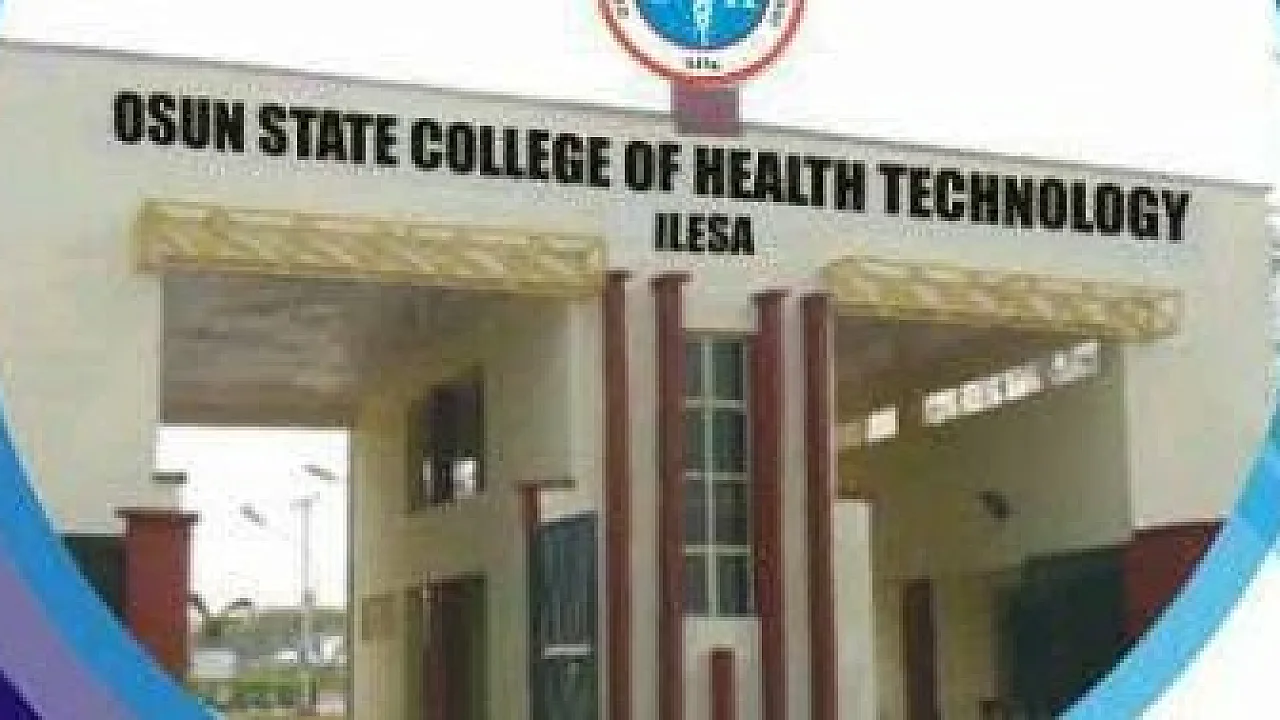
Students of Osun State College of Health Technology, Ilesa, have risen in defence of the institution's substantive Provost, Dr. Lateef Olarewaju Raheem, rejecting allegations of corruption, maladministration and financial impropriety against him while drawing attention to the significant academic and infrastructural developments recorded under his leadership.
The students described the allegations as false and misleading, expressing concern over what they consider an attempt to discredit an administration that has contributed significantly to the transformation of the institution.
The controversy followed a petition reportedly submitted by the Anti-Corruption Initiative of Nigeria, accusing the Provost of admission irregularities, financial misconduct, abuse of office and other administrative infractions.
However, students defending Raheem's administration have questioned the credibility of the allegations, insisting that the Provost's achievements should not be overshadowed by accusations that have yet to be established through a credible investigation.
Since his appointment on February 23, 2023, as the first substantive Provost of the institution, Raheem has overseen several developments aimed at strengthening academic excellence, improving healthcare training and repositioning the college for greater recognition among tertiary institutions in Nigeria.
One of the most remarkable achievements under his administration is the expansion and accreditation of academic programmes.
In January 2025, the National Board for Technical Education (NBTE) accredited six new programmes and reaccredited an existing programme at the institution.
The programmes included Medical Imaging and X-Ray Technology, Dispensing Opticianry, Epidemiology and Disease Control, Dental Surgery Technology, Dental Therapy and Health Information Management, while Environmental Health Technology received reaccreditation.
The development marked a significant advancement in the institution's academic capacity, creating additional opportunities for students seeking professional qualifications in healthcare-related disciplines.
Beyond academic expansion, Raheem's administration has recorded improvements in physical infrastructure, including the construction and renovation of departmental buildings, development of specialised laboratories and upgrading of facilities required for practical healthcare training.
The establishment and development of the Medical Imaging Department, improvements in opticianry training facilities and expansion of ICT infrastructure are among the projects associated with his leadership.
The college has also benefited from improvements in library facilities, the introduction of electronic library resources, procurement of professional textbooks, provision of computer systems and installation of internet facilities to support teaching, learning and research.
Other interventions reported under the administration include the installation of solar lighting, construction of drainage systems, renovation of lecture rooms and improvements to the institution's administrative facilities.
The introduction of computer-based examinations has also contributed to efforts to modernise the college's academic operations and align its assessment processes with contemporary tertiary education practices.
For students defending the Provost, these developments represent tangible achievements that cannot reasonably be ignored in assessing the performance of his administration.
They maintained that a balanced evaluation of Raheem's leadership must consider the progress recorded in academic accreditation, professional training, infrastructural development and institutional administration.
The students also challenged allegations that the Provost had deliberately obstructed the appointment of key administrative officers.
A report published by Nigerian Tribune on October 2, 2026, confirmed that the institution's Governing Council approved the appointment of Dr. Rasheed Kolawole as Deputy Provost, Academics, and Mrs. Abimbola Moradeke Asiyanbola as Deputy Provost, Administration.
The appointments, approved for two-year tenures, form part of the institution's administrative development and provide relevant context to the allegations surrounding the appointment of principal officers.
The college also operates with established administrative offices, including those of the Registrar, Bursar, Librarian and Director of Works.
Meanwhile, the allegations that more than 100 prospective students were allegedly diverted from the state-owned college to a privately owned institution in Ede have been strongly disputed by students supporting the Provost.
They challenged the petitioners to produce verifiable admission records, documented complaints from affected applicants and credible evidence establishing the alleged diversion.
The students also questioned allegations concerning compulsory patronage of a private medical laboratory and the reported collection of ₦100,000 for hostel accommodation.
They maintained that accusations involving financial transactions should be supported by authentic payment records, official directives and other verifiable documents rather than presented to the public as established wrongdoing.
The petition reportedly prompted a directive from the Osun State Ministry of Education requesting the Governing Council to investigate the allegations and submit its findings by October 7, 2026.
While the investigation remains a matter of public interest, the students insisted that the submission of a petition should not automatically be interpreted as proof of misconduct.
They expressed concern that the controversy could damage the reputation of the institution, create uncertainty among prospective students and parents, and undermine public confidence in the college's academic programmes.
The students further argued that Raheem's contributions to the institution deserve recognition, particularly considering the expansion of accredited programmes and the development of facilities intended to improve the quality of healthcare education.
A February 2025 account published by the college's Public Relations Officer, Kingsley Omoyeni, had documented several achievements under Raheem's administration, including classroom renovations, ICT development, improvements in library services, departmental expansion and the procurement of learning resources.
These developments were reported well before the emergence of the latest allegations.
The students maintained that the institution should be assessed through its verifiable achievements and administrative record rather than through allegations alone.
They also called for fairness in the handling of the controversy, stressing that the reputation of the Provost and the institution should not be damaged by claims that have not been conclusively established.
Although the allegations remain subject to investigation, the students reiterated their confidence in Raheem's leadership and emphasised the importance of sustaining the developmental progress recorded at the college.
They urged relevant authorities to ensure that any investigation is transparent, impartial and based on credible documentary evidence.
The students also called for greater recognition of the academic and infrastructural improvements recorded under the Provost, arguing that the institution's development should remain the priority of all stakeholders.
As the controversy continues, the expansion of academic programmes, improvements in learning facilities and administrative developments recorded during Raheem's tenure remain important elements of the public discussion about his leadership.
For students supporting the Provost, their position is that the achievements recorded under his administration should not be erased by allegations they strongly dispute.