


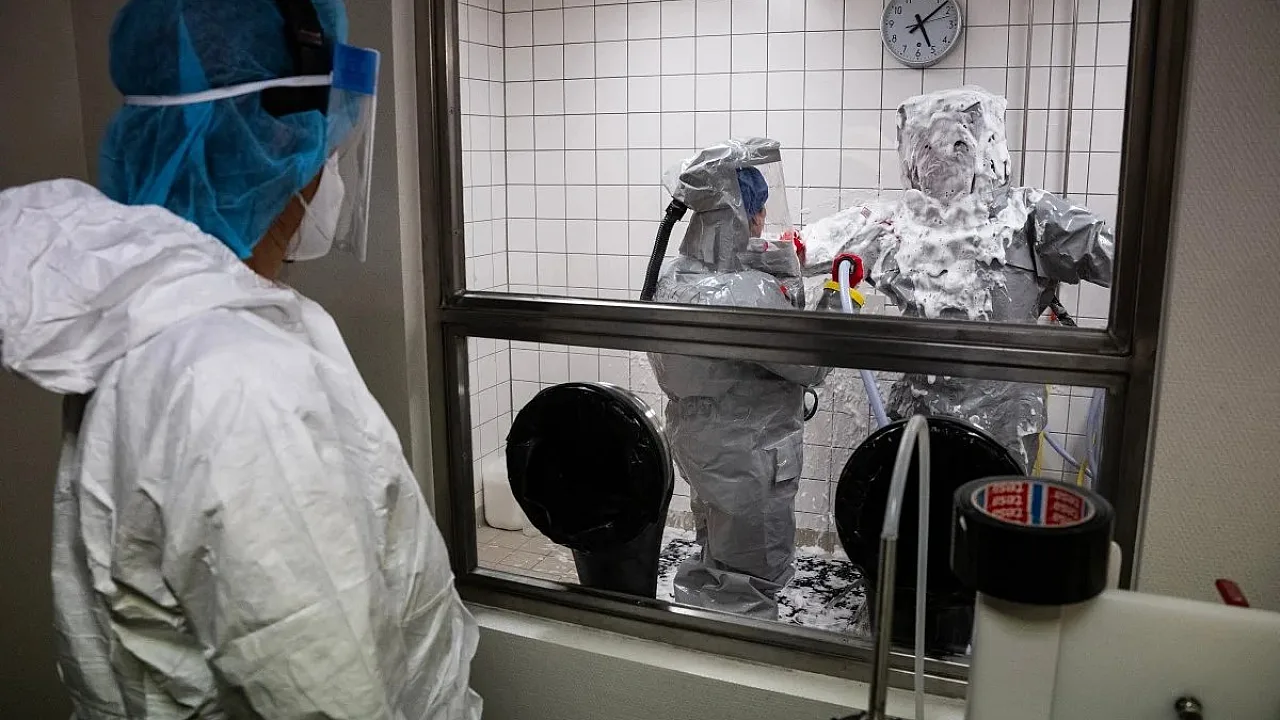
Nigeria has intensified efforts to contain the reported Ebola virus disease case in the country, with health authorities identifying 53 contacts and strengthening surveillance and treatment preparedness across several states.
The Nigeria Centre for Disease Control and Prevention (NCDC) said the response includes contact tracing, laboratory investigations, infection prevention measures and preparations to manage potential additional cases.
The confirmed case was identified as an infection caused by the Bundibugyo virus, a species of Ebola virus. According to the agency’s reported update, the patient was receiving medical care in isolation and had shown significant clinical improvement.
The NCDC said the number of identified contacts increased from 44 to 53 as investigations progressed. The contacts include healthcare workers, household members, caregivers and other individuals who may have been exposed to the patient.
Health authorities are monitoring the contacts for 21 days after their last possible exposure, in line with established public health procedures.
The agency emphasised that being identified as a contact does not mean an individual has contracted the virus, but requires appropriate monitoring to ensure early detection if symptoms develop.
As part of the containment strategy, state governments have strengthened disease surveillance, activated rapid response arrangements and reviewed the readiness of healthcare facilities to isolate and manage suspected cases.
In Osun State, authorities have reportedly approved preparedness measures involving personnel, training, equipment and public awareness. Oyo State has also strengthened surveillance and rapid response arrangements across its 33 local government areas.
Lagos State has reinforced disease surveillance and screening measures at the Murtala Muhammed International Airport, while other states, including Benue, Kaduna, Enugu and Borno, have increased preparedness and coordination among relevant health agencies.
At the federal level, the NCDC is working with the Federal Ministry of Health and Social Welfare, FCT health authorities and other partners to improve emergency coordination, strengthen infection prevention and ensure that suspected cases are promptly investigated.
The confirmed patient reportedly arrived in Nigeria on October 3, 2026, after travelling from Uganda through Addis Ababa. She developed symptoms on October 7 and subsequently sought treatment at private healthcare facilities.
The NCDC was notified on October 19, while laboratory testing confirmed the infection on October 20, according to the agency’s reported situation update.
The reported symptoms included fever, diarrhoea, body aches and sore throat. Investigations have focused on the patient’s exposure history, possible sources of infection and individuals who may have had contact with her.
The agency also reported suspected cases during its investigations, although subsequent testing cleared at least one suspected case in Rivers State.
Ebola is a severe viral disease that can spread through direct contact with the blood and other body fluids of an infected person who is symptomatic, as well as through contaminated materials. Symptoms may include fever, weakness, headache, muscle pain, vomiting and diarrhoea.
The NCDC has urged healthcare facilities to strengthen screening procedures, observe strict infection prevention protocols, use appropriate protective equipment and promptly report suspected cases.
Members of the public have also been advised to maintain good hand hygiene, avoid contact with the body fluids of suspected cases and cooperate with health officials conducting contact tracing.
Nigeria’s response draws on experience gained during the 2014 Ebola outbreak, when coordinated surveillance, contact tracing and infection control measures helped the country contain the disease.
The immediate priority, according to the public health response framework, is to identify and monitor all potentially exposed individuals, detect any additional infections early and prevent further transmission.
The NCDC has urged Nigerians to rely on verified information from health authorities and avoid spreading unconfirmed reports or stigmatising individuals identified as contacts.
As of the situation report referenced in the available updates, Nigeria had one confirmed case and 53 identified contacts. Health authorities continue to strengthen surveillance and preparedness as investigations progress.


Comments (0)
Leave a Comment
No comments yet. Be the first to share your thoughts.