


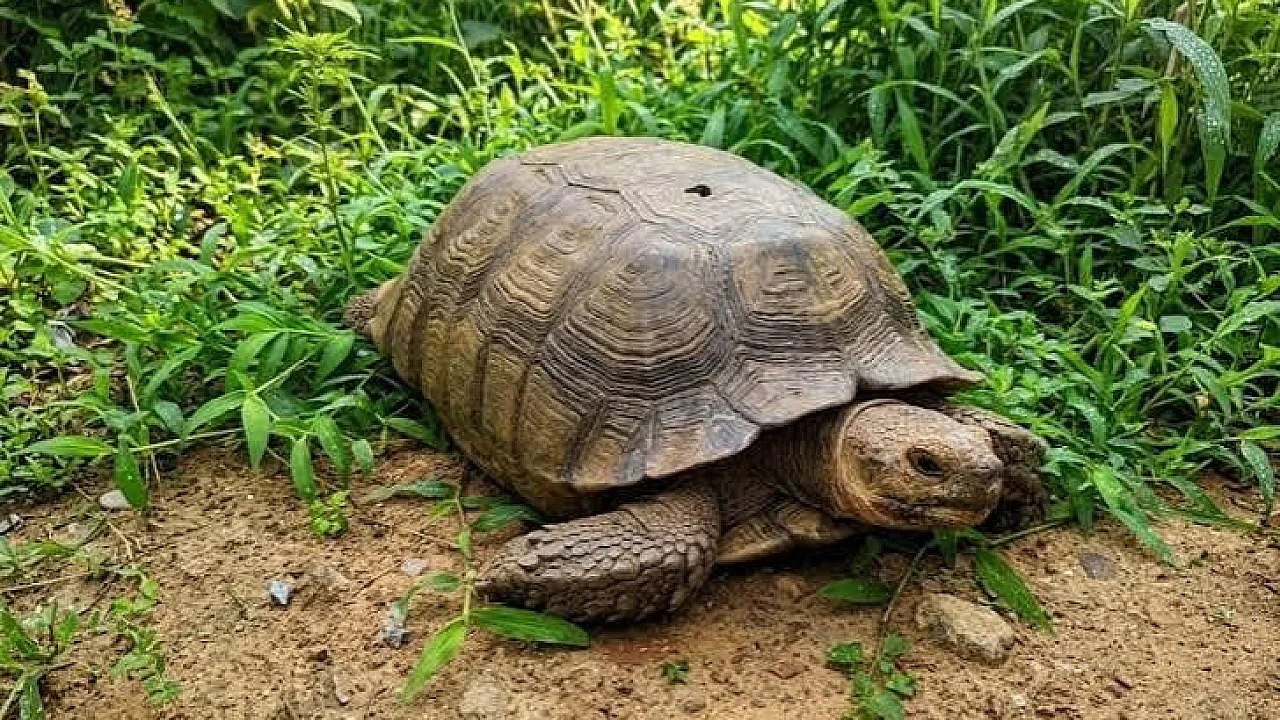
A tortoise believed by the Alaafin of Oyo's palace to have lived for about 420 years has died after becoming one of the ancient palace's best-known attractions.
The tortoise, popularly known as Baba, died after falling ill and refusing food, according to a statement from the palace.
Director of Media and Publicity to the Alaafin, Bode Durojaiye, said Baba had since been buried.
The claimed age is based on palace oral history and has not been independently established through scientific dating.
According to the palace, Baba's history could be traced to Oyo-Ile, the ancient capital of the Oyo Empire, before the tortoise was brought to the present Alaafin's palace in Oyo.
Baba was said to have lived through the reigns of successive Alaafins and was regarded as part of the cultural heritage inherited by each monarch.
The palace described the tortoise as more than a pet, saying it had become part of the oral history of the Yoruba people.
Over the years, Baba became a tourist attraction, with visitors travelling to the palace partly to see the animal because of its reported age and unusually long association with the institution.
Two palace officials were responsible for caring for the tortoise.
The palace said its diet included watermelon, corn pap wrapped in leaves and grass.
Baba reportedly became ill on Monday and stopped eating before dying.
The palace said the tortoise was affectionately called “Baba”, a Yoruba word commonly used for an elderly or respected man, because of its perceived age.
The animal was regarded in palace tradition as one of Oyo's oldest living symbols and was cared for by successive monarchs.
The current Alaafin, Oba Akeem Owoade, inherited Baba as part of the historic palace environment after ascending the throne.
The death removes one of the more unusual living attractions associated with the Alaafin's palace and the cultural history of the ancient Oyo Kingdom.



Comments (0)
Leave a Comment
No comments yet. Be the first to share your thoughts.