


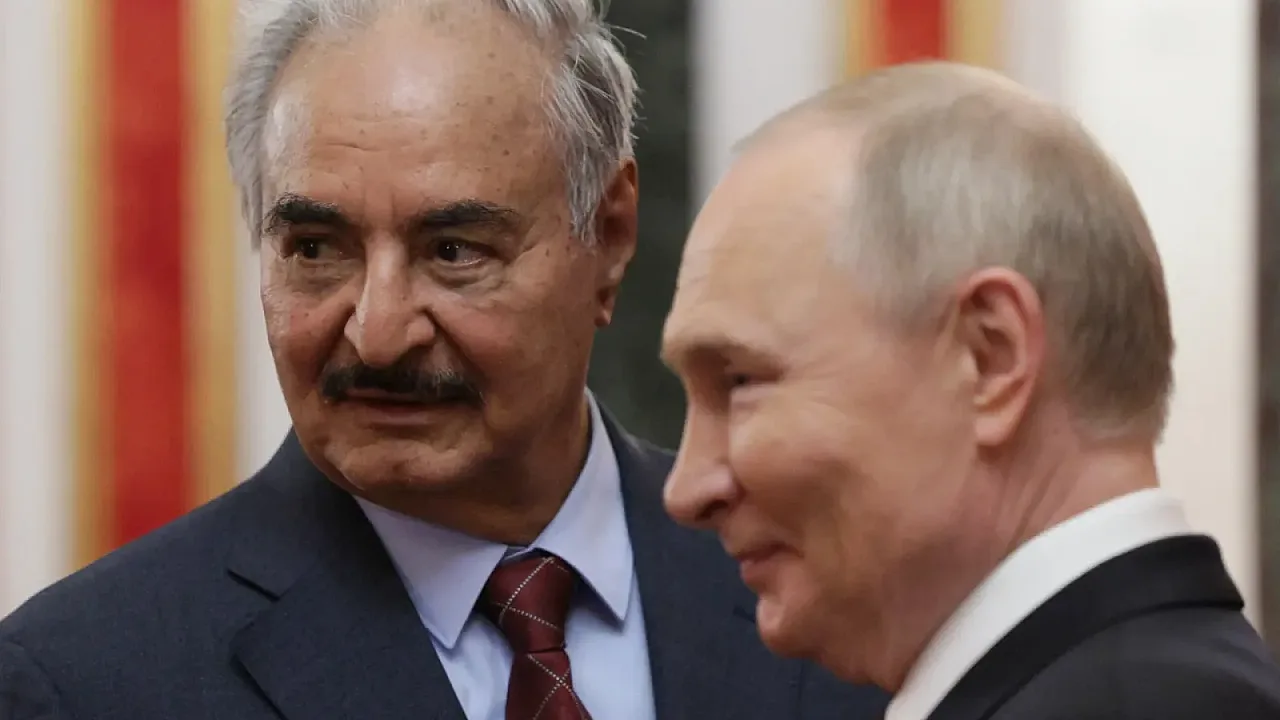
Officials from both sides of Libya's divided political scene have condemned a drone attack on a Russian warship docked in the port of Benghazi. Ukrainian President Volodymyr Zelenskyy took responsibility for the strikes on Monday, a day after the attack took place.
Libyan officials fear the attack could undermine fragile efforts to unify the country after more than a decade of war and division. Since the fall of Muammar Gaddafi in 2011, Libya has been run by two rival administrations. The internationally recognised Government of National Unity, led by interim Prime Minister Abdul Hamid Dbeibah, is based in Tripoli in the west. Authorities linked to renegade military commander Khalifa Haftar govern the east from Benghazi.
Haftar has long cultivated close ties with Moscow. Russia has reportedly supplied his self-described Libyan National Army with weapons, mercenaries and diplomatic backing. In return, Russia has kept a military and logistical foothold in the country, including ports and airfields.
An estimated 1,000 to 1,800 Russian personnel are believed to be in Libya, including members of the Africa Corps, a unit within Russia's Ministry of Defence. Ruslan Trad, a nonresident fellow of Global Security at the Atlantic Council, said Russia's bases in Libya are less about fighting there than about sustaining its wider military footprint across the Sahel and Central Africa.


Comments (0)
Leave a Comment
No comments yet. Be the first to share your thoughts.