


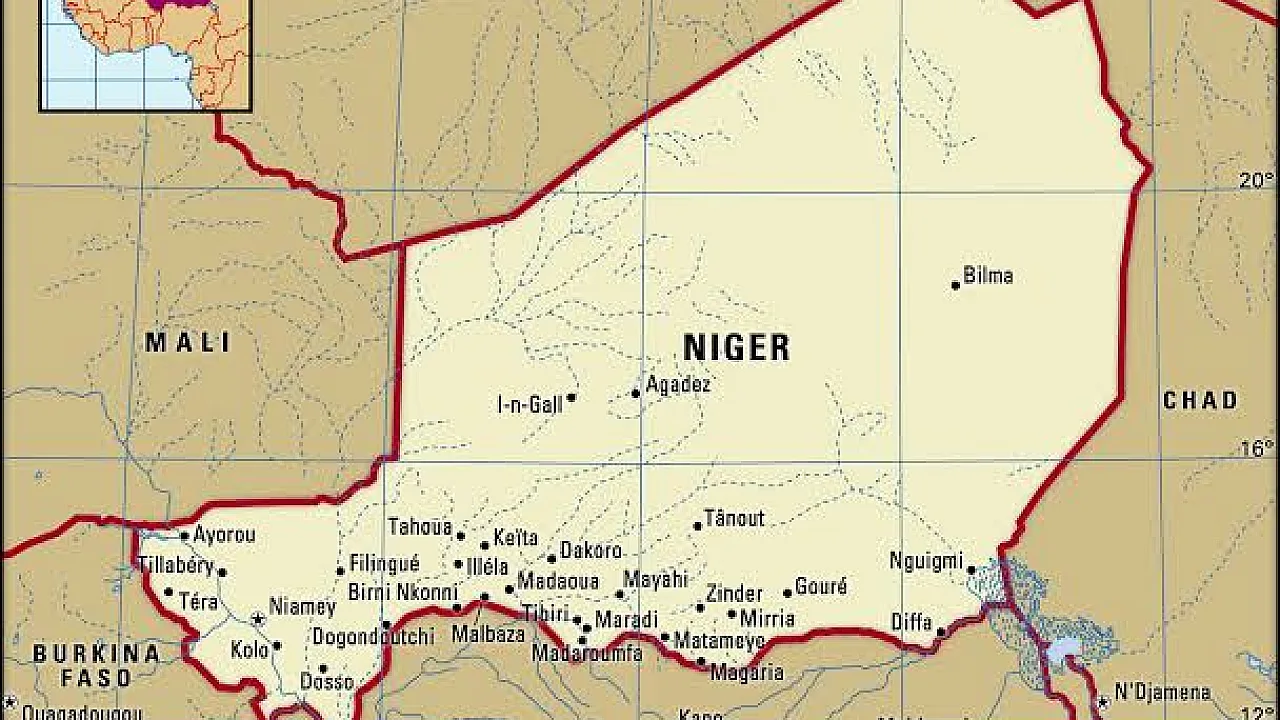
Thirty-seven suspected illegal miners died in the custody of the Nigeria Security and Civil Defence Corps (NSCDC) in Niger State on September 17, 2026. Days later, questions remain over the number of people held inside the detention facility, the conditions in which they were kept and the medical evidence needed to establish what caused their deaths.
The Federal Government has suspended 21 officers, including the Niger State NSCDC Commandant, and established an independent committee to investigate the incident.
However, a review of official statements and published survivor accounts by Verita Post reveals significant questions that remain unanswered, particularly concerning the number of detainees held in the affected cell and the medical examinations conducted before some of the deceased were buried.
The victims were among people arrested during NSCDC operations against suspected illegal mining activities in the M.I. Wushishi and Lukoto areas of Niger State on September 15 and 16.
By Thursday, September 17, 37 detainees had been found dead at the agency's detention facility in Minna.
The NSCDC initially suggested that a disease outbreak might have been responsible, although the agency subsequently acknowledged that the actual cause of death had not been established and required medical examination.
Survivors have offered a different account of what happened inside the facility.
Dauda Shehu, who survived the incident, told the Associated Press that approximately 65 detainees had been confined in a poorly ventilated cell.
According to Shehu, the detainees struggled to breathe and attempted to alert security personnel by banging on the cell door.
His account raises the possibility that overcrowding and inadequate ventilation contributed to the deaths, although the medical cause has not been conclusively established.
The number of people held inside the affected cell is now one of the most important unresolved questions.
Niger State Governor Mohammed Umaru Bago has given an account of the detention arrangements that differs from the survivor's description.
Speaking during an interview broadcast on NTA Network News on Friday, September 18, Bago said approximately 67 people were reportedly arrested and distributed across three cells.
According to the governor, female detainees were held in one cell, younger male detainees in another, and adult male detainees in a third.
He said no deaths occurred in the first two cells, while 37 detainees died in the third, which he described as overcrowded.
Bago also indicated that some detainees may already have been held in the facility before the newly arrested suspects arrived.
His explanation raises a question about whether the reported figure of 67 represents everyone held at the facility or only those arrested during the mining operations.
If the 67 suspects were distributed among three cells, how many people were actually inside the cell where the 37 deaths occurred?
The survivor's account of approximately 65 people being confined in one cell and the governor's description of 67 arrested suspects spread across three cells cannot be treated as equivalent figures without further clarification.
The difference does not, by itself, establish that either account is inaccurate.
It does mean that a reliable reconstruction of the incident requires investigators to establish the total number of people arrested, the number already in custody, the number assigned to each cell and the identities of those who survived.
The original arrest and detention records would be important in establishing those facts.
Bago himself questioned whether the reported number of arrested suspects was accurate and called for the precise number of detainees to be established.
The circumstances surrounding the deaths also remain disputed.
While the NSCDC initially raised the possibility of a disease outbreak, survivors described severe overcrowding and difficulty breathing.
Bago said investigators were considering possible suffocation and exposure to hazardous substances associated with mining activities.
He stressed that the actual cause of death had not been established and that medical and forensic examinations were necessary before conclusions could be drawn.
These explanations remain possibilities under investigation rather than confirmed findings.
The forensic evidence has become particularly important because of differing accounts concerning the handling of the deceased.
Reuters reported on September 18 that the victims had been buried in accordance with Islamic tradition, raising questions about the availability of their remains for further medical examination.
Bago subsequently clarified during an interview on TVC that some of the deceased had been released for burial after medical samples were collected, while other bodies remained in the mortuary for further examinations and autopsies.
According to the governor, the state medical team collected samples, including skin and sputum samples, before the release of the bodies concerned.
He said the Department of State Services was also involved in the investigative process.
The outstanding question is what those samples and examinations establish about the cause of death.
The publicly available statements reviewed by Verita Post do not establish how many complete autopsies were performed, which examinations were conducted on individual victims or whether any laboratory results have conclusively identified the cause of the deaths.
The distinction matters because the presence of a suspected hazardous substance, an account of breathing difficulties and a medical finding establishing a cause of death are different forms of evidence.
Investigators will need to determine whether the deaths resulted from one cause, several contributing factors or circumstances that differed between individual detainees.
The ages and identities of those who died also require attention.
Bago said many of the deceased were young people aged between 14 and 18 who had been working at mining sites.
The Federal Government's investigative committee has been specifically directed to establish the identities of the deceased.
A complete and verified register would help clarify how many of those detained were minors, when each person was arrested and what happened to them after entering NSCDC custody.
The investigation has now expanded beyond the initial inquiries announced by security agencies and the Niger State Government.
In a statement issued on Saturday, September 19, Interior Minister Olubunmi Tunji-Ojo announced the constitution of a 10-member independent committee to investigate the deaths.
The committee is chaired by Jonathan Kure, a retired Deputy Director-General of the Department of State Services, with Professor Isa Hayatu Chiroma, SAN, a former Director-General of the Nigerian Law School, serving as secretary.
Its members also include Professor Olayinka Buhari, a specialist in histopathology and former Chief Medical Director of the University of Ilorin Teaching Hospital, alongside representatives of the Niger State Government, Minna Emirate Council, Miners Association of Nigeria and other stakeholders.
The committee has been directed to establish the identities of the deceased and investigate the circumstances of their arrests, detention and deaths.
It is also expected to determine whether responsibility, negligence, misconduct or complicity can be established and recommend appropriate action, including compensation where applicable.
The minister gave the committee two weeks to complete its investigation and submit its report.
Tunji-Ojo also ordered the suspension of 20 additional NSCDC officers, following the earlier suspension of the Niger State Commandant, Suberu Siyaka Aniviye.
The suspended personnel include officers assigned to station security, arrests, investigations, legal affairs and guard duties.
Their suspension is an administrative measure pending investigation and does not establish that any of the officers caused the deaths or committed a criminal offence.
The minister directed that all records and material evidence connected to the incident be preserved and made available to investigators.
He also warned against the destruction of evidence, intimidation of witnesses or obstruction of the investigation.
President Bola Tinubu had earlier directed authorities to examine the circumstances of the arrests, the condition of the detainees when they entered custody, the number of people held at the facility, the medical attention provided and the events preceding the deaths.
The President said any official found responsible through negligence, abuse or other wrongdoing should face appropriate legal action.
The deaths have also triggered protests in Minna, where security personnel were deployed following unrest over the incident.
For the families of the deceased, the immediate issue extends beyond the suspension of officers or the announcement of another committee.
They are awaiting an explanation of how their relatives entered government custody alive and why 37 of them did not return.
The investigation must establish the identities of the victims, the actual number of detainees, the conditions inside the affected cell, the response to requests for assistance and the findings of the medical examinations.
Until those records and findings are available, neither the disease explanation nor the accounts suggesting suffocation or hazardous chemical exposure can be presented as the established cause of death.
The central unanswered question remains how 37 people died inside a government detention facility and what the available evidence can establish about the circumstances leading to their deaths.



Comments (0)
Leave a Comment
No comments yet. Be the first to share your thoughts.