

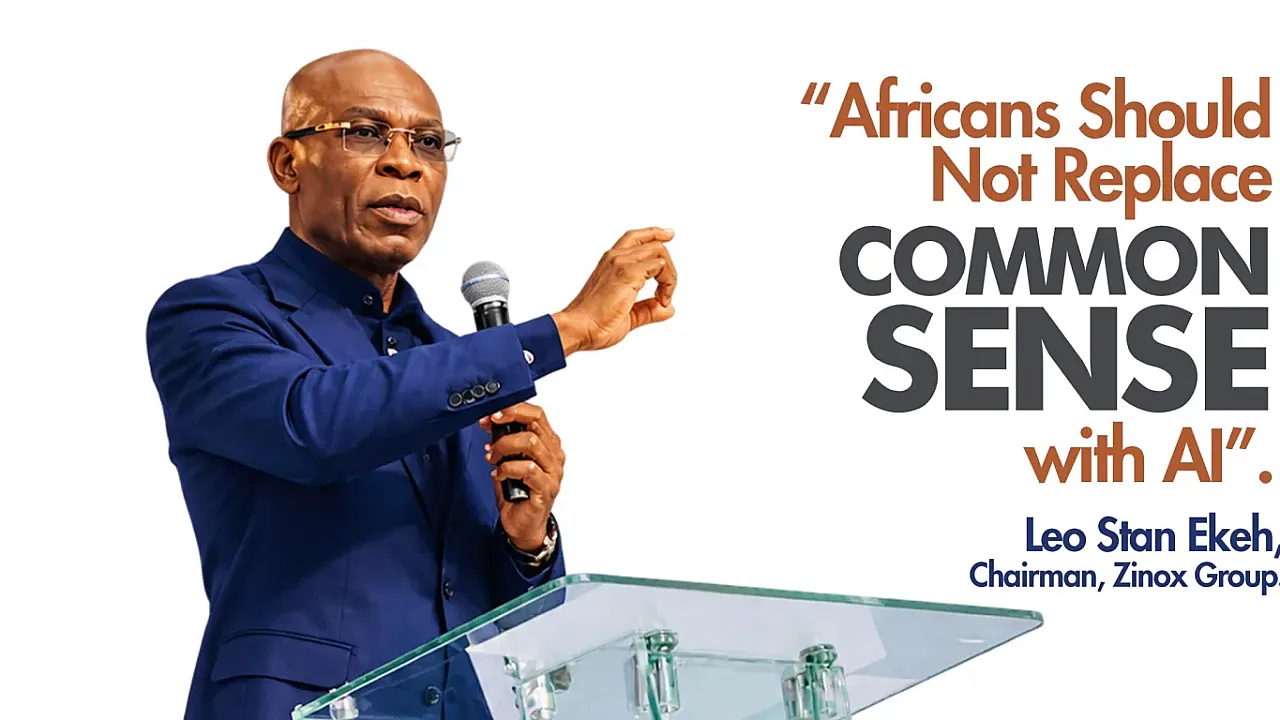
Leo Stan Ekeh, chairman of Zinox Group, has warned that Africa has just two years to choose between depending on foreign technology and building the capacity to become a global technology leader. He said the continent must urgently invest in indigenous technology businesses, digital infrastructure, research and technical expertise, or risk remaining a consumer of technologies designed and controlled by other economies.
Ekeh made the call while speaking to young entrepreneurs and information technology professionals after a recent visit to SpaceX's main Intelligence Station in Seattle, Washington. The visit was at the invitation of the American aerospace company founded by Elon Musk. His wife, Chioma Ekeh, chief executive officer of TD Africa Distributions, an authorised distributor of Starlink in West Africa, accompanied him.
According to Ekeh, Africa's technological future depends on whether its entrepreneurs can move beyond importing and deploying foreign solutions to building systems that can compete in international markets. He said the continent has the human potential to participate meaningfully in the global technology economy but must show greater ambition in developing businesses, infrastructure and intellectual capacity.
His remarks come as artificial intelligence, cloud computing and satellite connectivity increasingly shape how businesses, governments and economies operate. Ekeh also cautioned that while AI offers large opportunities, Africans must not let growing reliance on it weaken independent thinking and practical judgement.
He argued that AI systems can generate information, conduct research and recommend solutions, but their outputs must be assessed against the cultural, economic, social and political realities of African societies. He described the responsible use of AI as "Digital Holy Science", saying technology should expand human capabilities rather than replace the ability to reason and make decisions.
Ekeh also pointed to the risks of heavy reliance on foreign platforms. He cited a recent global disruption affecting Microsoft's 365 services, including Outlook, Teams and Copilot, as an example of how such dependence can leave users exposed.



Comments (0)
Leave a Comment
No comments yet. Be the first to share your thoughts.