


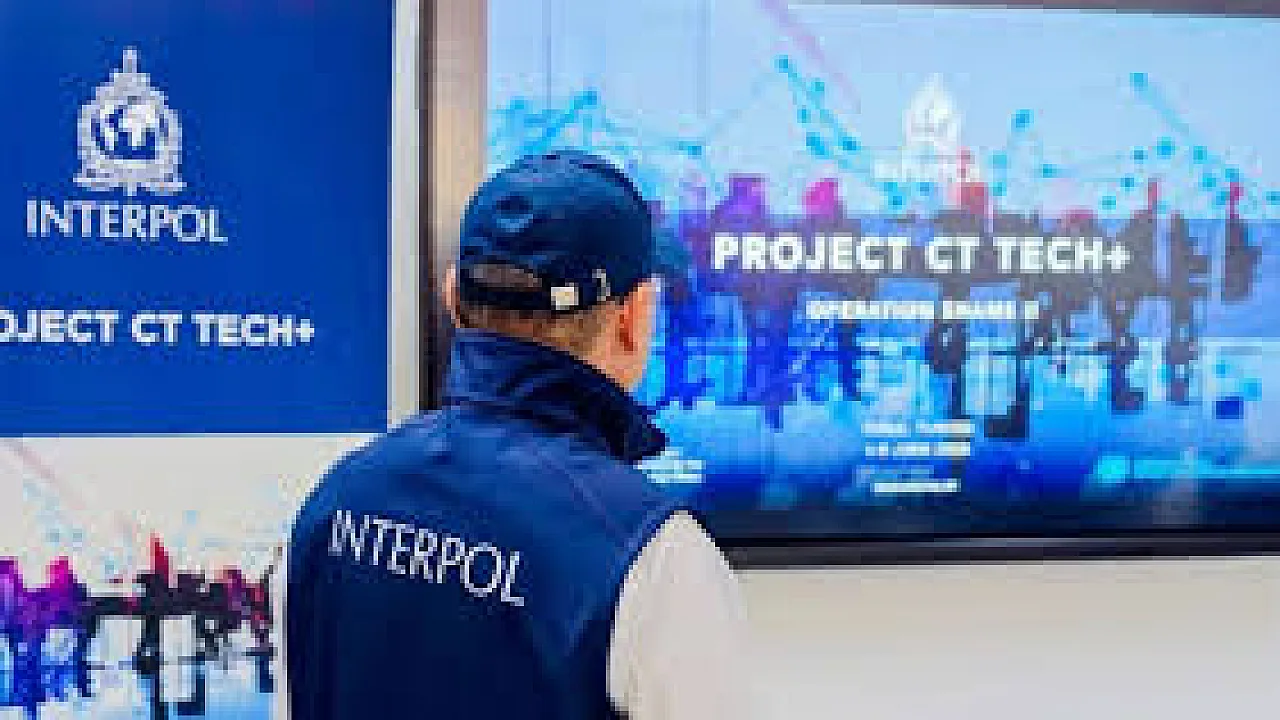
Nigeria was among 11 countries that participated in an INTERPOL counter-terrorism operation that used artificial intelligence and facial recognition technology to identify 126 suspected foreign terrorist fighters.
INTERPOL announced the results on Friday, saying the first-of-its-kind operation analysed visual material published by jihadist organisations online.
The operation, known as Operation Shams II, was conducted from June 1 to June 5, 2026, meaning the operation itself did not take place this week. Its results were publicly announced on September 18.
Twenty-eight specialised officers and experts from Nigeria and 10 other countries participated.
The other participating countries were Côte d'Ivoire, Ghana, Iraq, Kenya, Malaysia, the Philippines, Qatar, Tajikistan, Tunisia and Uzbekistan.
INTERPOL said investigators extracted 108,076 facial images from videos and other content distributed by jihadist groups.
AI-assisted tools were then used to automate parts of the collection, quality-control and deduplication process.
That reduced the material to 6,362 unique high-quality facial images, which were processed through INTERPOL's Facial Recognition System.
The organisation said 126 suspected foreign terrorist fighters had so far been identified through matches generated during the operation.
INTERPOL stressed that AI-generated results were reviewed and verified by trained officers and analysts before being used for investigative purposes.
The organisation did not provide a country-by-country breakdown of the 126 suspects, meaning the announcement does not establish that the identified individuals are Nigerians or are located in Nigeria.
The intelligence obtained during the exercise is being added to INTERPOL databases to assist participating countries in tracking suspected terrorist movements, locations and networks.
Investigative leads generated during the operation are already being used in judicial proceedings, according to INTERPOL.
The operation also used cryptocurrency-tracing tools to examine suspected terrorism financing.
INTERPOL said that work led to three urgent requests to a virtual asset service provider for customer information connected to suspected illicit funding.
Participants also met representatives of the online gaming industry to examine concerns over youth radicalisation through digital environments.
The organisation said thousands of images remain to be processed, meaning additional matches could still emerge.
The exercise was conducted under the CT TECH+ Project funded by the European Union's Foreign Policy Instruments and supported by the United Nations Office of Counter-Terrorism.



Comments (0)
Leave a Comment
No comments yet. Be the first to share your thoughts.