


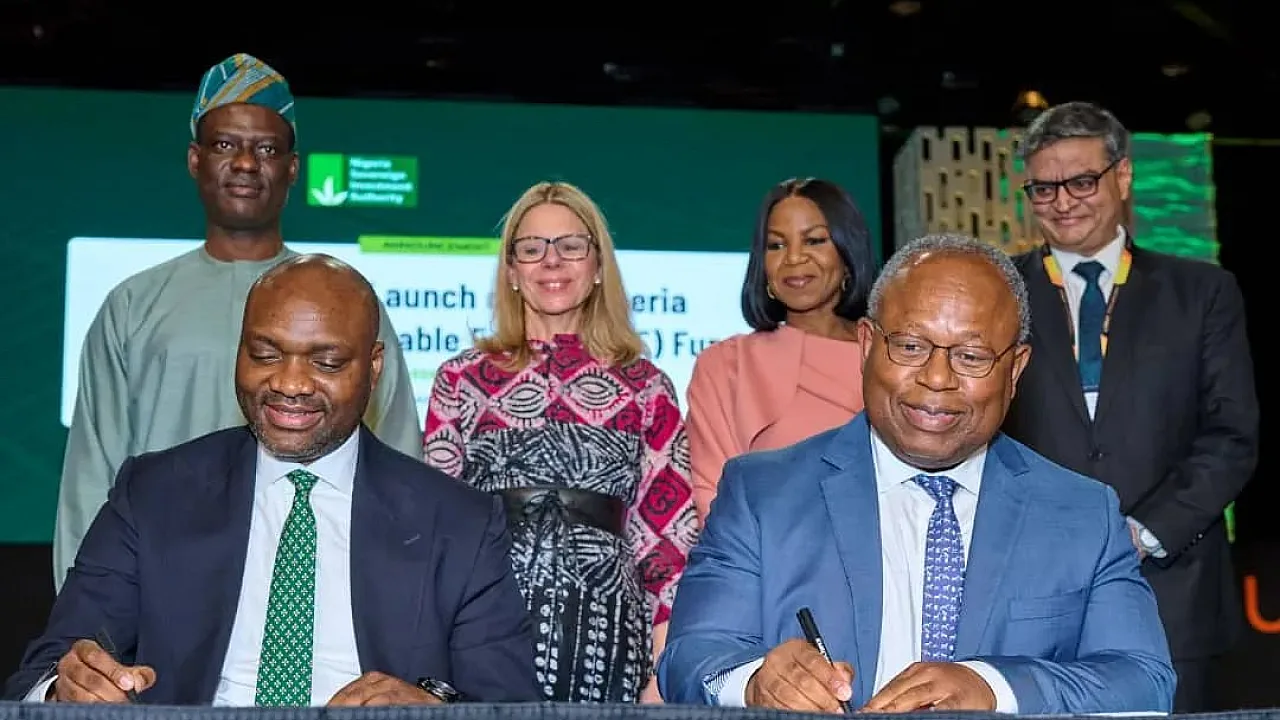
Nigeria has commercially launched a $300 million Nigeria Distributed Renewable Energy (DRE) Fund, aimed at mobilising investment for off-grid and distributed renewable energy projects across the country.
The fund was unveiled in New York on the sidelines of the 81st United Nations General Assembly, marking the transition from its structuring phase to active capital deployment. The initiative is being co-managed by the Nigeria Sovereign Investment Authority (NSIA) and Africa50, with support from Sustainable Energy for All (SEforALL).
The investment vehicle is designed to scale distributed renewable energy solutions, including solar mini-grids, standalone solar systems and other off-grid technologies, particularly in communities and businesses that remain underserved by conventional electricity infrastructure.
According to the partners, the fund is intended to help mobilise the scale of capital required to expand reliable, affordable and sustainable electricity access while creating investment opportunities within Nigeria's renewable energy sector.
NSIA Managing Director and Chief Executive Officer, Aminu Umar-Sadiq, described the commercial launch as a major milestone, saying it signals to investors, governments and development partners that Nigeria's distributed renewable energy market is ready to operate at scale.
Africa50 Group Chief Executive Officer, Alain Ebobissé, said the partnership combines NSIA's local market expertise with Africa50's pan-African investment and fund-management capabilities, while SEforALL contributes energy-access expertise and the World Bank provides global development experience and catalytic capital.
The World Bank Group, a founding partner of the fund, has made an initial $25 million contribution through the International Development Association (IDA). The contribution is intended to help catalyse additional investment in distributed renewable energy projects.
The fund is also aligned with Mission 300, the continental initiative seeking to connect 300 million people across Africa to electricity by 2030. Distributed renewable energy systems are expected to play an important role in expanding access, particularly where conventional grid infrastructure is difficult or costly to extend.
SEforALL Chief Executive Officer and Special Representative of the UN Secretary-General, Damilola Ogunbiyi, said the fund represents a step towards translating Mission 300's electricity-access ambitions into concrete investments and new connections.
The commercial launch follows an earlier March 2025 announcement of plans for a larger $500 million DRE Nigeria Fund under the broader DRE Africa Platform. The earlier framework identified mini-grids, solar home systems, commercial and industrial power solutions, embedded generation and energy-storage technologies as potential areas of investment.
The partners said the Nigerian fund could eventually provide a model for similar country-level financing platforms across Africa, with the broader objective of attracting private capital into distributed renewable energy and accelerating electricity access.
For Nigeria, the initiative comes as policymakers and investors continue to seek alternatives and complementary solutions to the country's existing electricity infrastructure. The deployment of mini-grids and standalone renewable systems could provide power to communities and businesses that are not adequately served by the national grid.
The effectiveness of the fund will ultimately depend on the pace of capital deployment, the projects selected for financing and the extent to which investments translate into new and more reliable electricity connections across underserved areas.

Comments (0)
Leave a Comment
No comments yet. Be the first to share your thoughts.