


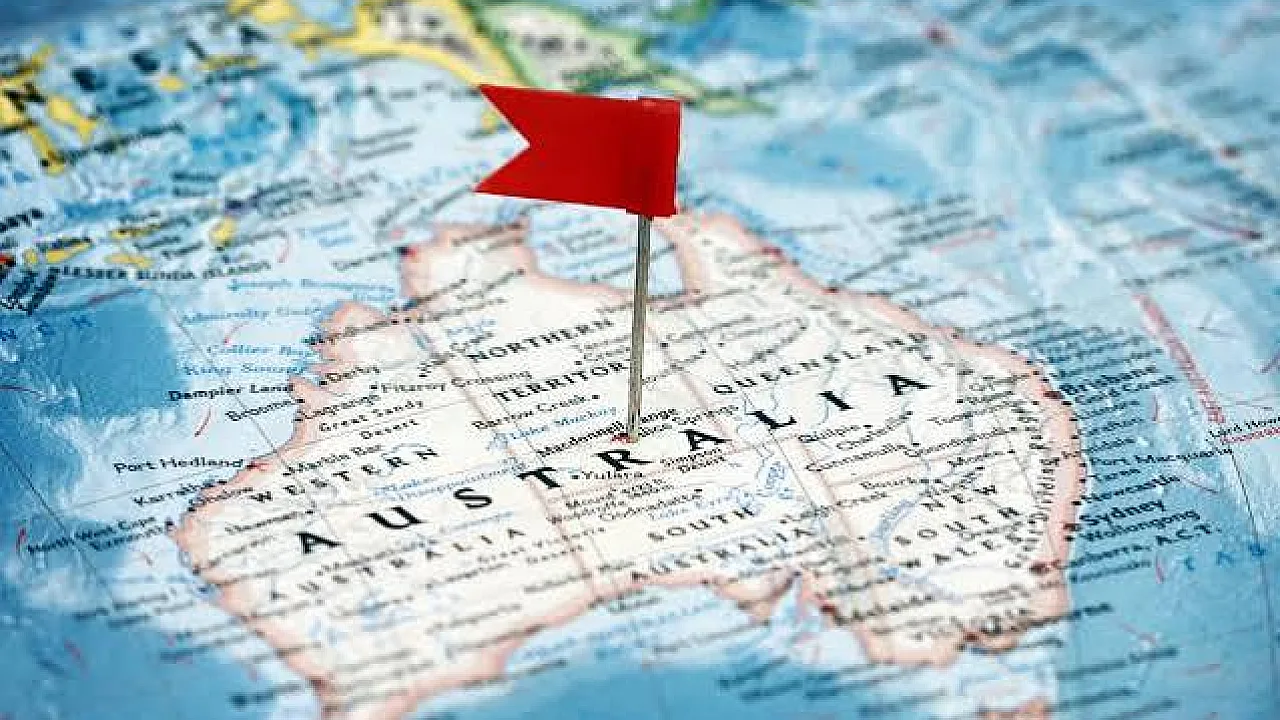
Australia has announced a major tightening of its migration rules that will prevent most international students from bringing partners and children with them while studying, as the government seeks to reduce net overseas migration.
Home Affairs Minister Tony Burke announced the changes on Thursday as part of a broader overhaul covering international students, visitor visas, working holidaymakers and people who overstay their visas.
Under the new measures, secondary applicants such as spouses, partners and children will generally no longer be permitted on most student visas.
However, the government says exceptions will apply in some circumstances, including for certain students from Pacific and ASEAN countries and students undertaking particular courses, such as PhD programmes.
Burke also said the changes would not be used to separate families who are already in Australia under existing student visa arrangements.
The new conditions are aimed at future visa arrangements rather than retrospectively removing dependants who are already lawfully in the country, according to details reported from Burke’s National Press Club address.
The government is also targeting what it describes as “visa hopping” among international students.
Under the changes, students seeking to renew their visas will generally be expected to progress to a higher level of qualification.
That could mean, for example, moving from a bachelor’s degree to a master’s programme rather than repeatedly enrolling in courses at the same or a lower academic level in order to extend a stay in Australia.
The changes form part of Australia’s plan to bring annual net overseas migration down to about 225,000 by 2028, from around 300,000 currently.
Australia has already tightened several student migration requirements in recent years.
Reuters reported that student visa application fees have risen to A$2,500, nearly three times their level four years ago, while English-language requirements and minimum financial requirements have also been strengthened.
International education remains a major part of the Australian economy. It contributed about A$53.6 billion in the year to June 2025, making it the country’s fourth-largest export, according to Reuters.
Universities Australia chief executive Luke Sheehy has warned that repeated restrictions could weaken confidence in Australia’s international education industry.
The government, however, says the changes are intended to better control temporary migration while continuing to allow skilled migrants and students whose presence meets Australia’s economic needs.
What changes for international students?
For prospective international students, the most significant changes include:
- Most student visa holders will no longer be able to add partners or children as secondary applicants.
- Some students from Pacific and ASEAN countries will receive exemptions.
- Certain courses, including some PhD programmes, will also qualify for exceptions.
- Students seeking another student visa will generally have to demonstrate academic progression rather than moving sideways or down to another qualification.
The precise visa conditions and individual eligibility will still depend on the rules applied to each visa category.
What about families already in Australia?
Burke said families already attached to existing visas in Australia will not be broken up because of the new policy.
The restrictions are aimed at future visa issuance and applications rather than removing existing dependants solely because of the policy change.
Australia also changes visitor visa rules
The overhaul extends beyond students.
Australia will add a “No Further Stay” condition to visitor visas, designed to stop people from entering on a short-term visitor visa and then remaining in the country while applying onshore for a different category of visa.
The government is also increasing enforcement against visa overstayers, including plans to recruit 100 additional compliance officers.
Officials are considering using a former quarantine facility in Melbourne to accommodate immigration detainees as part of the stronger enforcement programme.
Working holiday visas also affected
Working holidaymakers will also face tighter rules.
Australia plans to introduce ballots for some applicants seeking second and third-year working holiday visas and maintain regional work requirements.
British working holidaymakers will remain exempt from some of those restrictions because of Australia’s trade agreement with the United Kingdom.
What it means for Nigerians planning to study in Australia
The family restrictions apply broadly to international students, meaning prospective Nigerian applicants should not assume that a spouse or children can automatically accompany them under a student visa.
Applicants should check the exact visa conditions that apply to their course and circumstances before paying tuition fees, making relocation plans or submitting dependant applications.
The sources reviewed by Verita Post do not yet specify a single commencement date for every element of the new policy, so applicants should verify current conditions through Australia’s Department of Home Affairs before making decisions.
Australia’s Department of Home Affairs remains the official authority for visa eligibility, conditions and applications.



Comments (0)
Leave a Comment
No comments yet. Be the first to share your thoughts.