


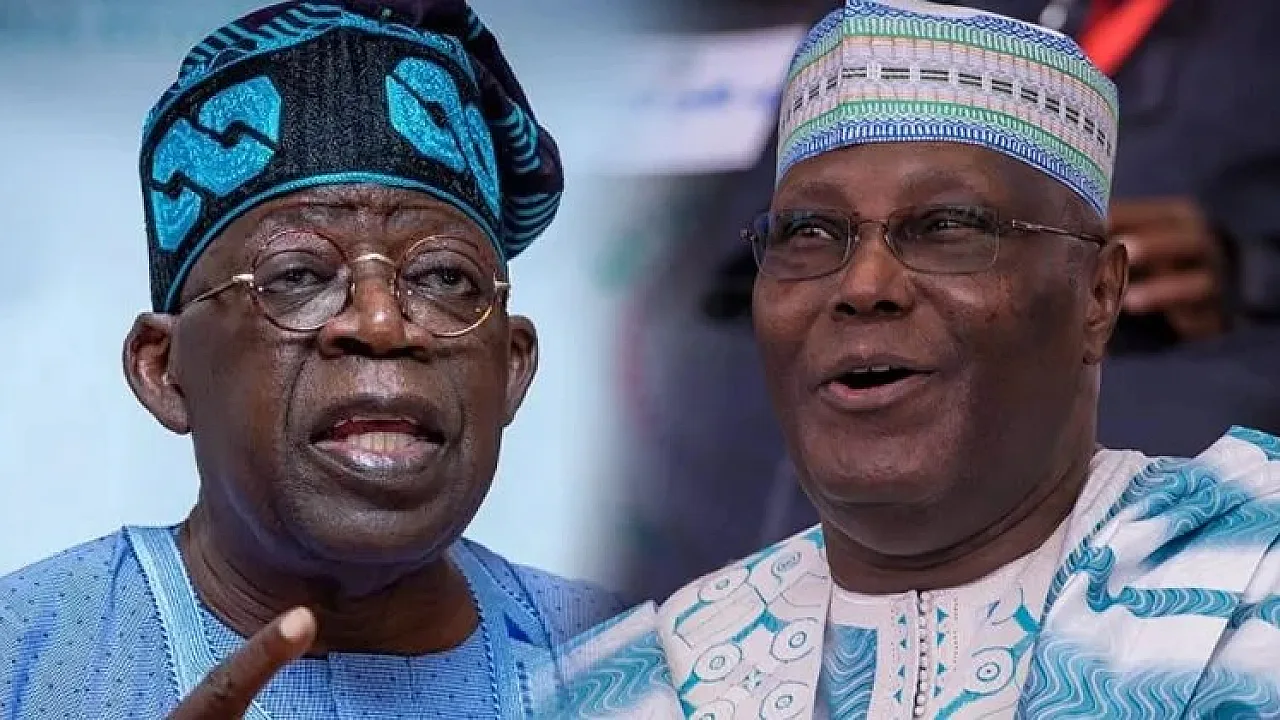
Former Vice-President and African Democratic Congress (ADC) presidential candidate, Atiku Abubakar, has challenged the Federal Government’s plan to secure fresh $1.5 billion financing from the World Bank, demanding accountability for existing debts before additional borrowing.
Atiku’s position followed reports that the Federal Government had opened discussions with the World Bank on three proposed facilities worth $500 million each, even as Nigeria’s total public debt climbed to ₦166.79 trillion as of June 30, 2026.
The latest debt figure, released by the Debt Management Office (DMO), represents a ₦7.44 trillion increase from the ₦159.35 trillion recorded at the end of March 2026. Year-on-year, the debt stock increased by ₦14.39 trillion from ₦152.40 trillion in June 2025.
The proposed World Bank financing comprises three separate $500 million facilities targeting climate resilience, social protection and early childhood development.
The most advanced proposal is an additional $500 million for the Agro-Climatic Resilience in Semi-Arid Landscapes (ACReSAL) project. According to reports, the World Bank is expected to consider the proposal on October 29, 2026. If approved, it would increase the total size of the ACReSAL programme from $700 million to $1.2 billion.
Another proposed $500 million facility is expected to support social protection programmes, including cash transfers, strengthening of social-protection systems and measures aimed at improving support for poor and vulnerable households.
The third facility, also valued at $500 million, is the Nigeria Early Childhood Development programme. It is designed to expand access to integrated healthcare, nutrition, childcare, early learning, water and sanitation services for children aged zero to five across the 36 states and the Federal Capital Territory.
Reacting to the proposed borrowing, Atiku called on the Federal Government to first provide a detailed account of existing debts and explain how previous loans had been utilised.
The former vice-president questioned the continued accumulation of debt and demanded greater transparency over government borrowing, repayments and the projects financed with borrowed funds.
Atiku also called for clear information on the beneficiaries of previous borrowing, the projects executed, the amount spent and the measurable outcomes achieved.
He argued that Nigerians should be able to assess the impact of government borrowing, particularly against the backdrop of economic reforms and increased government revenue.
The former vice-president’s comments were contained in a statement issued by Phrank Shaibu, Director of Strategic Communications of the ADC Presidential Campaign Council.
The latest DMO figures show that domestic debt accounted for ₦91.59 trillion, representing 54.91 per cent of Nigeria’s total public debt, while external debt stood at ₦75.20 trillion, representing 45.09 per cent.
Nigeria’s exposure to the World Bank Group also stood at $20.73 billion as of June 2026, comprising $19.12 billion owed to the International Development Association (IDA) and $1.61 billion to the International Bank for Reconstruction and Development (IBRD).
The proposed new facilities would therefore add to Nigeria’s existing obligations if approved and disbursed.
The debate over the proposed borrowing comes amid continued discussions about Nigeria’s debt sustainability, government revenue, infrastructure financing and the use of concessional loans to fund development programmes.
While the proposed World Bank facilities are intended for specific development interventions, Atiku’s intervention has renewed calls for greater transparency and accountability in Nigeria’s borrowing and debt-management processes.
Comments (0)
Leave a Comment
No comments yet. Be the first to share your thoughts.