


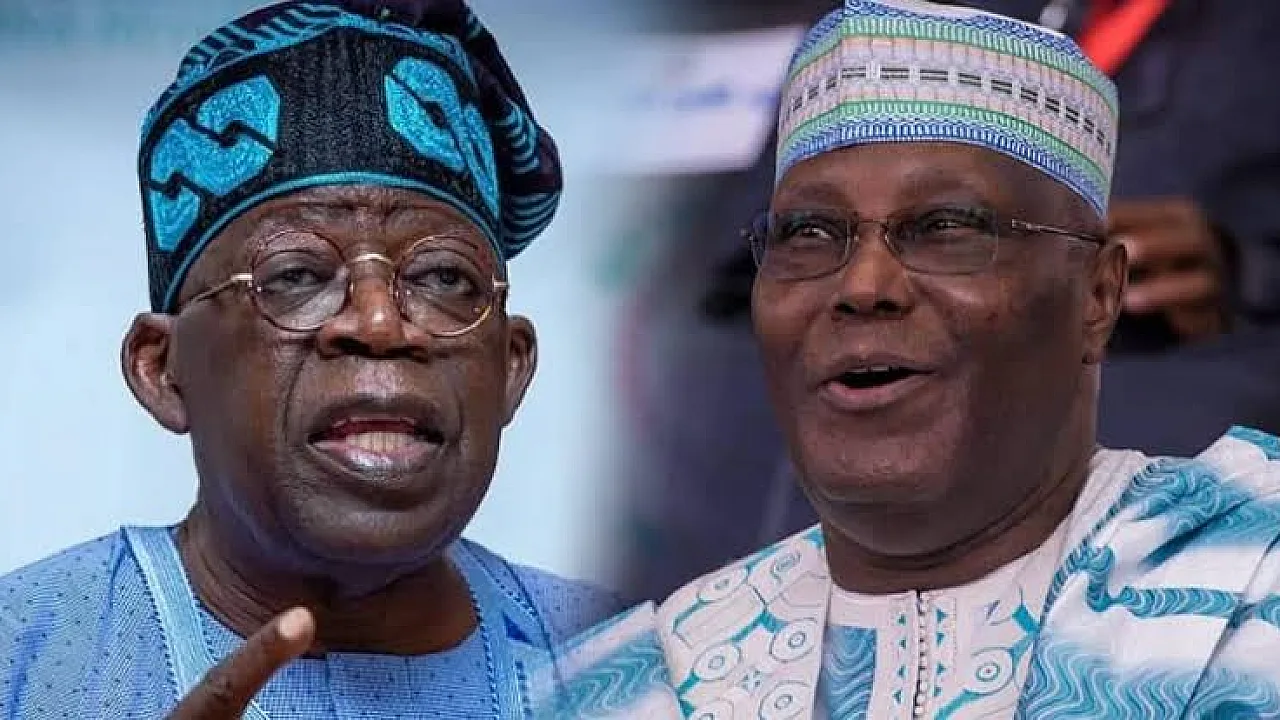
Former Vice-President Atiku Abubakar has accused President Bola Tinubu’s administration of making life and business more expensive in Nigeria, promising to pursue policies aimed at reducing production and living costs if elected president in 2027.
Atiku, the African Democratic Congress presidential candidate, made the remarks in a statement issued on Tuesday by his Senior Special Assistant on Public Communication, Phrank Shaibu.
He argued that while Nigeria has recorded stronger raw-material exports, households are struggling with weaker purchasing power and manufacturers continue to face high operating costs.
According to Atiku, Nigeria’s raw-material exports rose from ₦1.86 trillion in the first half of 2025 to about ₦3.84 trillion in the corresponding period of 2026, an increase of roughly 106 per cent.
The latest National Bureau of Statistics foreign-trade reports for the first and second quarters of 2026 provide the underlying trade data used for the comparison.
Atiku said increased exports alone should not be treated as sufficient evidence of economic progress if much of what Nigeria sells abroad remains unprocessed.
He argued that commodities such as cocoa, hides, cotton and minerals could generate more jobs and income if processed locally before export.
“There is nothing wrong with exporting. The problem is exporting the cheapest part of the value chain and buying back the expensive part,” Atiku said.
He also blamed high fuel prices, electricity costs, transportation expenses, expensive credit and naira weakness for increasing pressure on manufacturers and households.
Atiku said his economic plan would focus on long-term financing, industrial clusters, agro-processing, mineral beneficiation and support for businesses that add value to Nigerian raw materials locally.
He also reiterated a proposed production-linked fuel subsidy, which he said would be restricted to petroleum products refined in Nigeria and tied to verified domestic production and supply.
The former vice-president further proposed a $10 billion financing programme for young entrepreneurs and start-ups, targeting sectors including agriculture, manufacturing, processing, logistics and technology.
Atiku said the objective would be to strengthen domestic production, increase foreign-exchange earnings and reduce pressure on the naira.
“Our promise is simple: we will make it cheaper to produce, easier to do business, more rewarding to manufacture and more affordable to live,” he said, adding: “Tinubu made Nigeria expensive. Atiku will make Nigeria affordable again.”
Atiku also cited ₦2.14 trillion in unsold manufactured goods as evidence of weak consumer demand.
However, that figure requires context. Published data attributed to the Manufacturers Association of Nigeria show that the ₦2.14 trillion figure relates to 2024, when unsold manufactured inventory increased from about ₦1.14 trillion in 2023. The more recent published figure cited for the first half of 2025 was ₦1.04 trillion.
Atiku’s broader argument is that rising production costs and reduced household purchasing power are putting pressure on manufacturers, but the ₦2.14 trillion figure should not be presented as a current 2026 inventory figure without qualification.
The Tinubu administration has defended its economic reforms in previous statements as necessary to stabilise public finances, attract investment and strengthen the economy over the longer term. Atiku, however, has increasingly made the cost of living and domestic production central themes of his campaign ahead of the 2027 presidential election.

Comments (0)
Leave a Comment
No comments yet. Be the first to share your thoughts.