

Before the Fintech Title
Long before payments became the public centre of his work, Clinton Oyelami was already building with software. An old freelancer profile from 2017 described him simply as a computer programmer working with Java and Android. His current LinkedIn profile lists an NDG Linux Essentials credential issued in 2016 and an Android Development credential from Andela in 2017. It also records time as a Project Management Lead with Developer Student Clubs from 2018 to 2019 and a short mentoring role with Google Developers in 2019. Those details matter because they place the beginning of his story in hands-on technology, not in a later founder title.
By 2020, Oyelami was writing publicly about entrepreneurship while still close to the student ecosystem. In one article, he argued that campus can give young founders useful advantages: networks, fast customer feedback and early adoption. His advice centred on having a clear vision, setting achievable goals, building accountability and continuing through the pressure of combining school with business. That writing also pointed readers toward SparkHub, an Ile-Ife student entrepreneurship initiative built around helping undergraduate and postgraduate founders.
Sturrd, SparkHub and Learning in Public
One of the earliest products publicly linked to Oyelami was Sturrd. Archived posts from the Hult Prize OAU community identified him as a co-founder of the platform, while Sturrd's own archived social activity positioned it as a campus-facing dating and social product around OAU. Startup Lagos later profiled Oyelami and said he had previously built a dating app with more than 3,000 paying subscribers during his college years. Verita has not independently audited that subscriber figure, so it is best understood as a reported milestone from that founder profile rather than an independently verified number.
The same Startup Lagos profile said Oyelami had also helped establish and grow a community of young founders to more than 1,200 members. Public traces from the period connect that community-building instinct with SparkHub, which describes itself as a student-run entrepreneurship initiative at Obafemi Awolowo University and says it was created to foster entrepreneurship and support student startups. Oyelami's own 2020 writing repeatedly directed student founders toward SparkHub resources. Together, these records show that product-building and ecosystem-building were developing side by side.
The SwyftPay Chapter
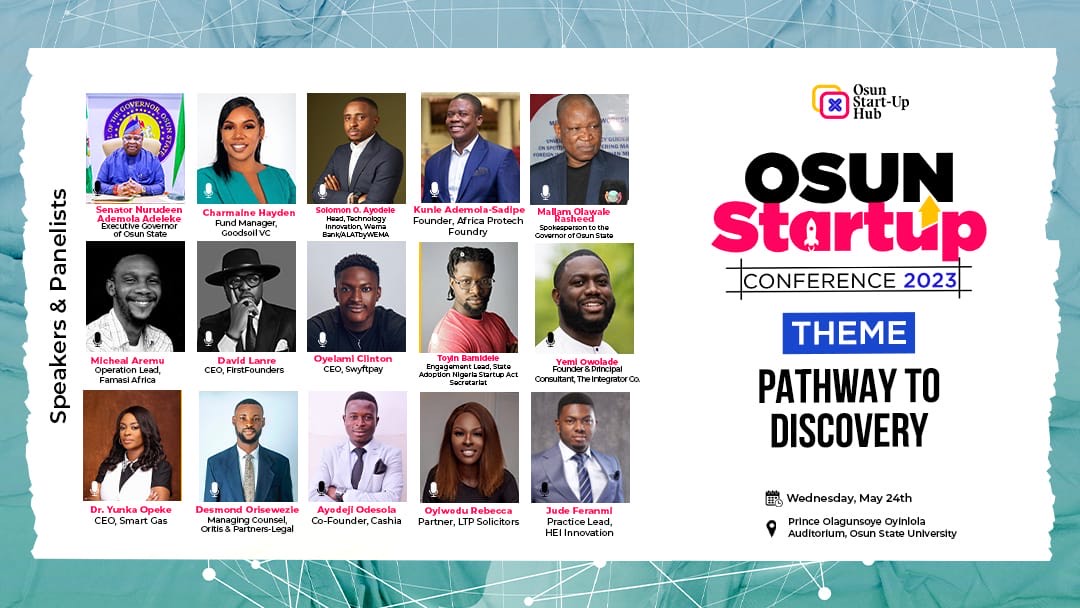
By August 2021, Startup Grind Ife listed Clinton Oyelami as CEO of Swyft at an entrepreneurship event around OAU. The company later became more visible as SwyftPay. In 2023, Oyelami described SwyftPay as a mobile payment application designed to let users send and receive money and published a walkthrough of a self-service feature for resolving pending transactions. TechEconomy listed him as CEO of SwyftPay among the panelists announced for the 2023 Osun Startup Conference, while ITEdgeNews described SwyftPay as one of the notable market-stage startups in Osun at the time.
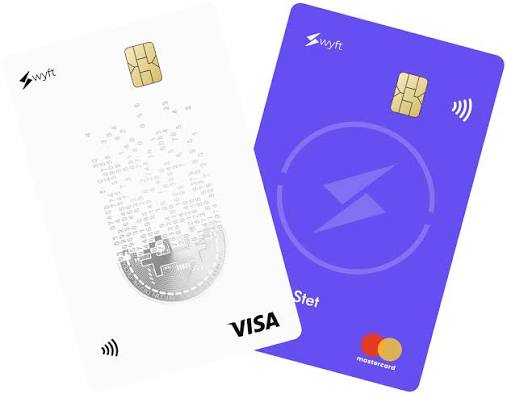
The consumer product continued to evolve. In April 2024, Oyelami was still publishing product guidance around the SwyftPay Card, including how Nigerian users could pay for X Premium through in-app purchases. In a later reflection on the company's evolution, he described the 2023 SwyftPay phase as a B2C fintech offering virtual USD cards. That makes SwyftPay important in the story not as a footnote, but as the bridge between his campus-era experiments and the larger payments infrastructure he would pursue next.
From SwyftPay to Swerv
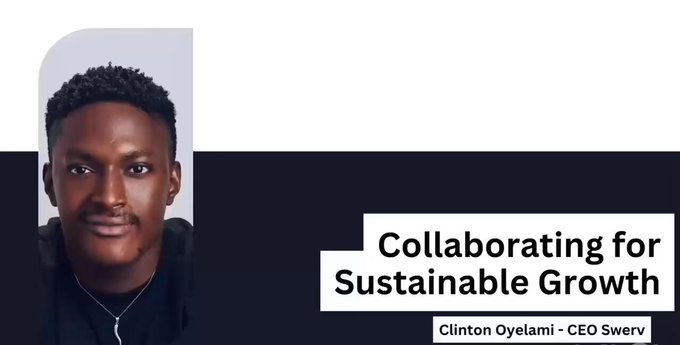
Oyelami later described the business as having transformed from SwyftPay into Swerv, a business-to-business payments platform. Swerv's current website presents the company as a payment gateway that enables businesses to accept payments from customers in Africa and beyond, online and in person. The shift is a significant one: from serving individual consumers directly to building rails intended for fintechs, merchants and other businesses.
More recently, Oyelami publicly said Swerv had processed more than $10 million in stablecoin transactions over a period of several months through an OTC business serving companies that need offshore US-dollar liquidity and cross-border settlement. He pointed to demand from fintechs, importers and payment platforms seeking predictable foreign exchange, faster supplier payments and more reliable dollar liquidity. The $10 million figure is Oyelami's own public disclosure and has not been independently audited by Verita, so the publication keeps that attribution clear.
Returning to the Ecosystem
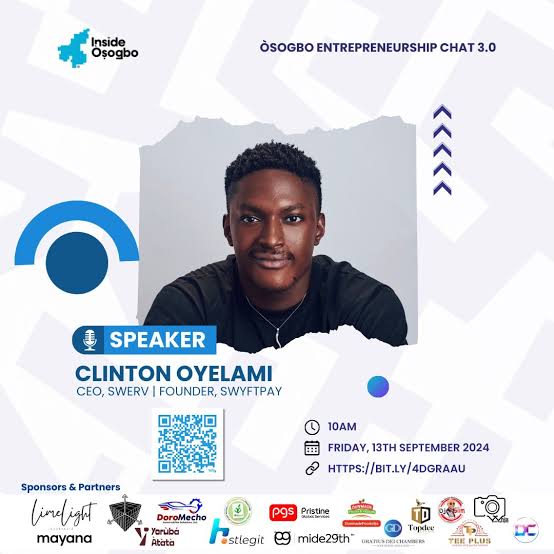
Even as the company moved beyond its campus origins, Oyelami continued to appear in the same ecosystem that shaped his early years. Swerv announced him as a speaker at a 3MTT Osun meetup on the OAU campus in 2024. The company also promoted his return to Oduduwa Hall for the Undergraduate Students Summit, where he was billed to facilitate a workshop on navigating the technology ecosystem and building a technology career from campus.
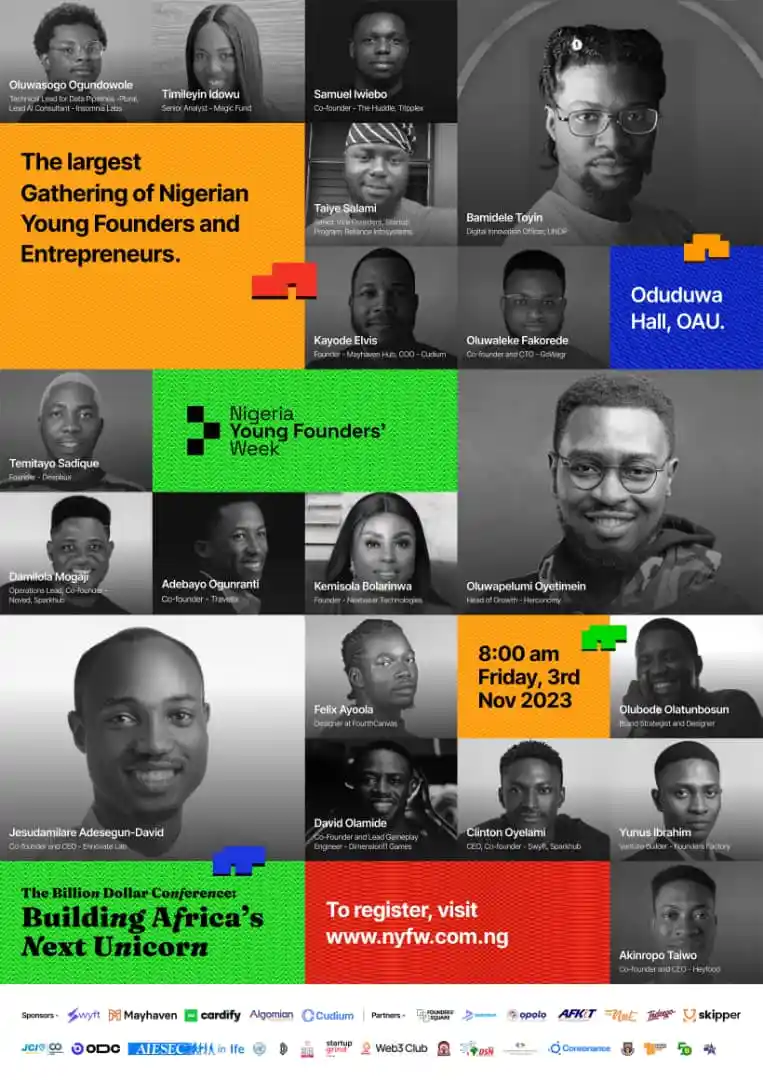
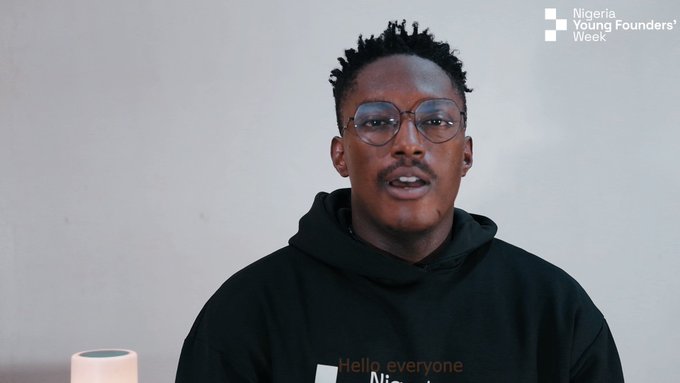
He was also part of the wider founder-development conversation in Osun. TechEconomy and Techpression documented his involvement in the 2023 Osun Startup Conference, where conversations centred on startup growth, the local ecosystem and what founders in Osun would need to build larger companies. Around the same period, the Nigeria Young Founders Week programme at OAU included Oyelami in conversations about entrepreneurship and campus startup culture.
A Pattern of Iteration
There is a temptation to tell founder stories as if every step led neatly to the next. Oyelami's public record suggests something messier and more useful: learn a technical skill, build a product, build a community, test another product, change the market, change the customer, and keep going. Sturrd, SparkHub, SwyftPay and Swerv are different things, but together they reveal a consistent interest in using technology to make difficult experiences simpler and in bringing other young builders into the process.
His own public descriptions make that pattern clearer. On LinkedIn, he says he is passionate about entrepreneurship and sees young Africans as the future. In a Savvy Fellows profile, he put the product side of that ambition more directly: he wants to build products that can positively impact society and make people's lives better. That is a stronger frame for his story than any single transaction milestone. The through-line is not simply fintech. It is the repeated act of building, learning, adjusting and building again.