


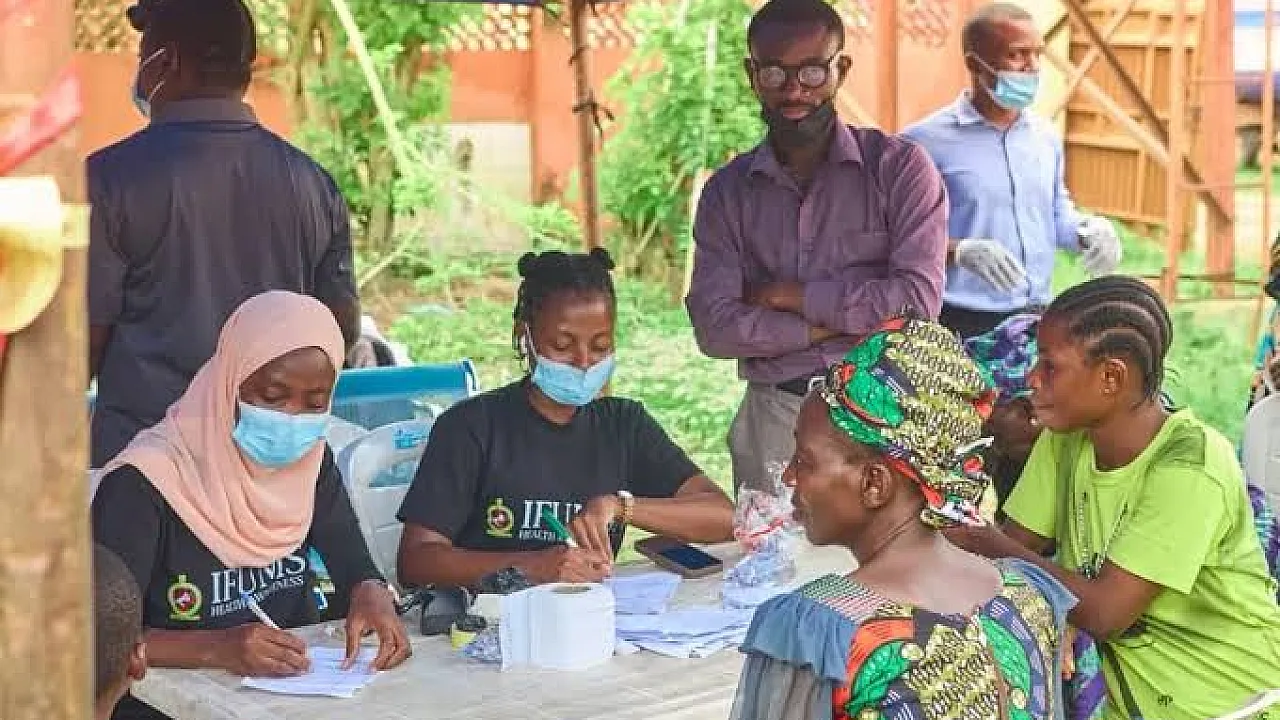
More than 200 residents of Moro community in Osun State have received free medical treatment, screenings, medication and surgical care through an outreach organised by medical students of Obafemi Awolowo University.
The intervention was carried out by the IFUMSA Health Awareness Club, an arm of the Obafemi Awolowo University Medical Students’ Association, as part of its annual effort to take basic healthcare services to communities where cost can make treatment difficult to access.
About 90 medical, dental and pharmacy students participated in the exercise, supported by two surgeons and three perioperative nurses from the Obafemi Awolowo University Teaching Hospitals Complex.
Residents were offered blood pressure and blood sugar checks, hepatitis B and HIV screening, urinalysis, body mass index assessment, dental consultations and medications.
The outreach went beyond routine screening.
A surgical team also carried out free day-case procedures, including hernia repairs, lipoma excisions, hydrocelectomies and breast lump excisions.
The Chairperson of the IFUMSA Health Awareness Club, Oladipupo Ayomipo, said the programme was designed partly in response to the financial pressure many Nigerians face when trying to obtain healthcare.
She said the students had continued the outreach because of the number of people who still depend heavily on out-of-pocket spending for even basic treatment.
For families managing tight household budgets, the difference between detecting an illness early and allowing it to worsen can sometimes come down to whether a consultation, test or procedure is affordable.
That gap is what the students said they were trying to narrow.
The Local Organising Committee Chairperson, Aboderin Oluwatobiloba, said access to basic healthcare should not depend entirely on a person's economic circumstances.
The Moro programme brought together students from different health disciplines alongside qualified professionals, allowing residents to receive several services in one place rather than simply undergoing a single screening exercise.
That combination is particularly important in medical outreach programmes because identifying a health problem is only one part of the process. Patients may also need consultation, medication, referral or, in some cases, a procedure.
In Moro, some beneficiaries were able to receive those surgical procedures without paying the usual cost associated with them.
The exercise continues a pattern of community-based health programmes organised by the students.
In 2025, the club held a similar outreach in Ede, Osun State, providing residents with medical consultations, medication, dental and eye care as well as health education.
This year's programme moved the intervention to Moro.
The town sits within an area closely connected to the OAU community, but access to specialist healthcare can still be difficult for residents who cannot easily afford hospital bills or travel regularly for treatment.
The students said their wider aim was to use medical training not only within teaching hospitals and classrooms, but also in communities where preventable or treatable conditions may otherwise go unattended.
For the more than 200 people reached in Moro, the programme meant access to services ranging from a simple blood pressure check to surgery.
For the students involved, it also provided an opportunity to work alongside experienced health professionals while serving residents outside the hospital environment.
The organisers have not announced a final beneficiary count beyond saying that more than 200 residents received care.
What is clear from the exercise is that the outreach was not limited to health talks or screenings. It combined preventive care, diagnosis, medication and surgical intervention in a single community programme.
Comments (0)
Leave a Comment
No comments yet. Be the first to share your thoughts.