


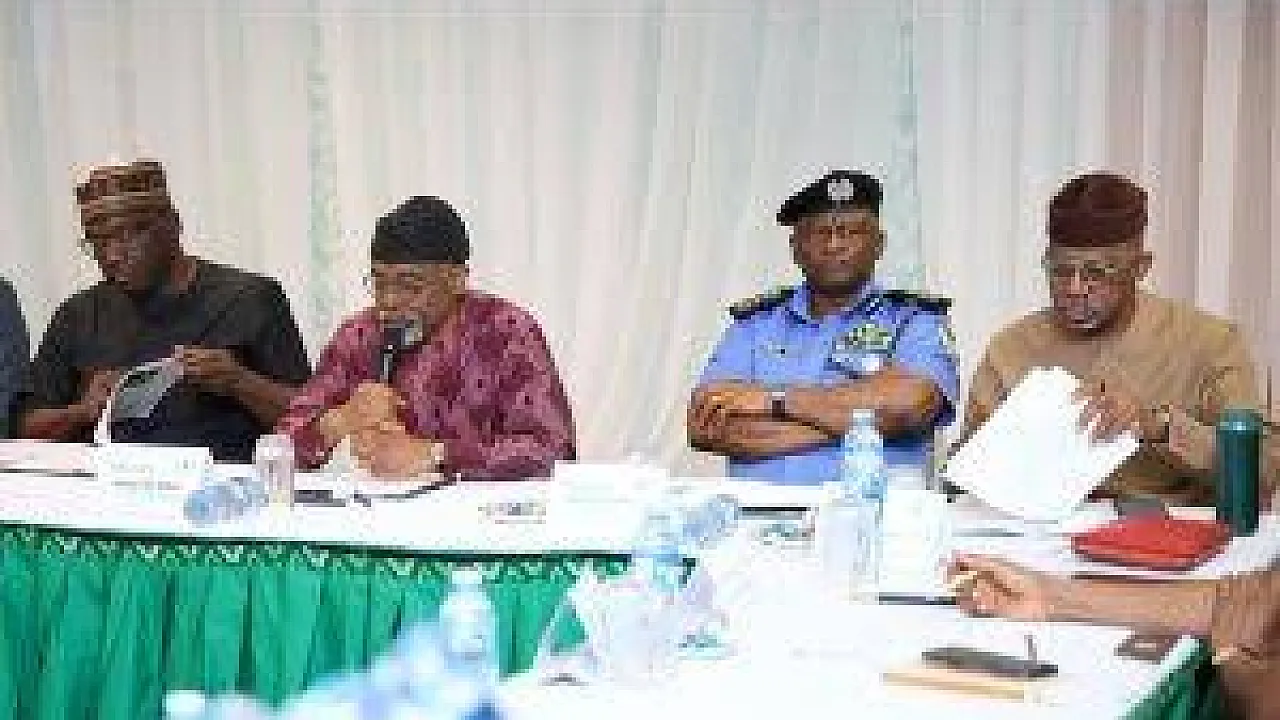
The Federal Government has submitted the 2026 National Policing Bill and 29 consequential amendment bills to the Federal Ministry of Justice for review, marking another step towards the proposed establishment of state police in Nigeria.
The development comes as five additional state Houses of Assembly approved the constitutional amendment required to introduce state policing, bringing the number of states reported to have endorsed the proposal to 10.
According to a statement issued on Tuesday, October 20, 2026, by the Chief of Staff to the President, Femi Gbajabiamila, the Presidential Working Group on the National Policing Bill completed its drafting assignment and forwarded the documents to the Attorney-General of the Federation and Minister of Justice on Monday, October 19.
Gbajabiamila, who chairs the working group, explained that the ministry would examine the proposed legislation to ensure compliance with legislative drafting standards and prevent conflicts with existing laws.
The Ministry of Justice is expected to complete the review and return the validated documents to the working group on or before October 30, 2026.
Following the review, the committee will give the bills final consideration before presenting them to President Bola Tinubu for further action.
The proposed legislation seeks to establish a legal framework for a dual policing system comprising a Federal Police Service and State Police Services, replacing the existing arrangement under which policing is primarily controlled by the Federal Government.
Meanwhile, PUNCH reported on Wednesday that the Houses of Assembly in Ogun, Delta, Plateau, Kwara and Adamawa states had approved the constitutional amendment.
The five states joined Edo, Osun, Oyo, Rivers and Zamfara, which had reportedly endorsed the proposal earlier.
The constitutional amendment bill was transmitted to the 36 state Houses of Assembly on September 16, 2026, following its passage by the National Assembly.
Under Nigeria's constitutional amendment process, the proposal requires approval from at least 24 of the 36 state Houses of Assembly before it can proceed towards final enactment.
The move to establish state police has remained a major subject of national debate, with supporters arguing that decentralised policing could improve responses to insecurity by allowing states to address threats peculiar to their communities.
Concerns have also been raised about the possibility of political interference, inadequate funding and the misuse of state-controlled security institutions.
The Presidency has maintained that the proposed policing framework is intended to introduce a coordinated structure involving both federal and state security authorities.
Gbajabiamila said the working group's assignment was progressing alongside the constitutional amendment process currently before state lawmakers.
Although the latest development represents progress in the government's policing reform agenda, state police have not yet been established, as the necessary legislative and constitutional processes remain incomplete.
Further developments are expected as the Ministry of Justice concludes its review and more state assemblies consider the proposed constitutional amendment.



Comments (0)
Leave a Comment
No comments yet. Be the first to share your thoughts.