


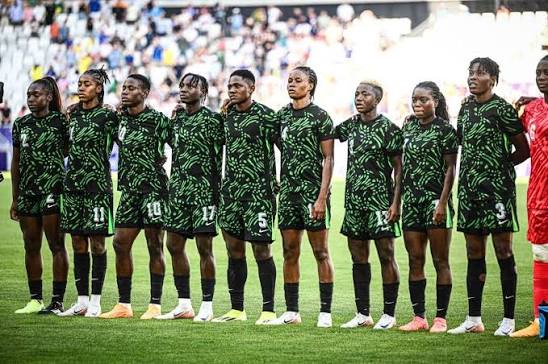
The Super Falcons of Nigeria were knocked out of the 2026 Women’s Africa Cup of Nations after suffering a 1-0 defeat to Cameroon in the quarter-finals in Casablanca on Sunday.
A 19th-minute goal by Cameroon’s Nyadjou proved enough to eliminate the defending champions and end their hopes of securing an automatic ticket to the 2027 FIFA Women’s World Cup in Brazil through the tournament.
The result marked a significant setback for Justin Madugu’s side, who entered the competition as favourites and record 10-time winners of the continental championship. Despite dominating large periods of the match and creating several clear chances, the Super Falcons were unable to find a way past Cameroon goalkeeper Michaely Bihina, who produced a string of outstanding saves.
The defeat means Nigeria must now take the longer route to the World Cup through the intercontinental play-offs, a far more uncertain path than the direct qualification that comes with reaching the WAFCON final.
Matches between Nigeria and Cameroon in women’s football have often been tight and physical. This quarter-final was no different. Cameroon sat deep, absorbed pressure, and waited for opportunities on the counter. Their early goal changed the complexion of the game, forcing Nigeria to chase the match for more than 70 minutes.
The Super Falcons responded with sustained attacks. Captain Rasheedat Ajibade, Asisat Oshoala, and other forwards repeatedly tested the Cameroon defence, but the final pass or finishing touch was missing at critical moments. Bihina’s performance between the posts was decisive. Reports from the match indicated she made as many as eight saves, several of them from close range.
For a team that had recovered strongly from an opening-game loss to Malawi and then thrashed Egypt 6-2 to reach the last eight, the manner of the exit will sting. The Super Falcons showed character in the group stage. On the day it mattered most in the knockout phase, they lacked the clinical edge that has defined their most successful campaigns.
The immediate consequence is the end of Nigeria’s title defence. More importantly, it complicates their journey to the 2027 Women’s World Cup. Automatic qualification slots from WAFCON are limited, and teams eliminated at the quarter-final stage usually have to fight through additional play-off rounds.
This is not the first time the Super Falcons have faced such a situation, but the expectation around this squad was higher. With experienced players still in the fold and a coach who had restored some stability, many observers believed Nigeria would at least reach the semi-finals.
The result also raises questions about preparation, squad depth, and the ability to break down organised, defensive opponents — a recurring challenge for the team in major tournaments when the early rhythm is disrupted.
Women’s football in Nigeria continues to carry heavy expectations. The Super Falcons remain the most successful women’s national team in Africa, but consistency at the highest level has become harder as more countries invest seriously in the women’s game. Cameroon’s victory is evidence of that growing competitiveness.
For the players, the disappointment will be personal. Many of them have given years of service to the national team and understand the weight of representing Nigeria. For the coaching crew and the Nigeria Football Federation, the focus will quickly shift to the play-off pathway and the need to rebuild momentum.
The Super Falcons still have a route to the World Cup. It is simply longer and less certain than the one they hoped to take through a deep run at WAFCON.
Sunday’s result in Casablanca will be remembered as a missed opportunity — one that Nigerian women’s football will have to respond to with clarity and urgency in the months ahead.
Comments (0)
Leave a Comment
No comments yet. Be the first to share your thoughts.