


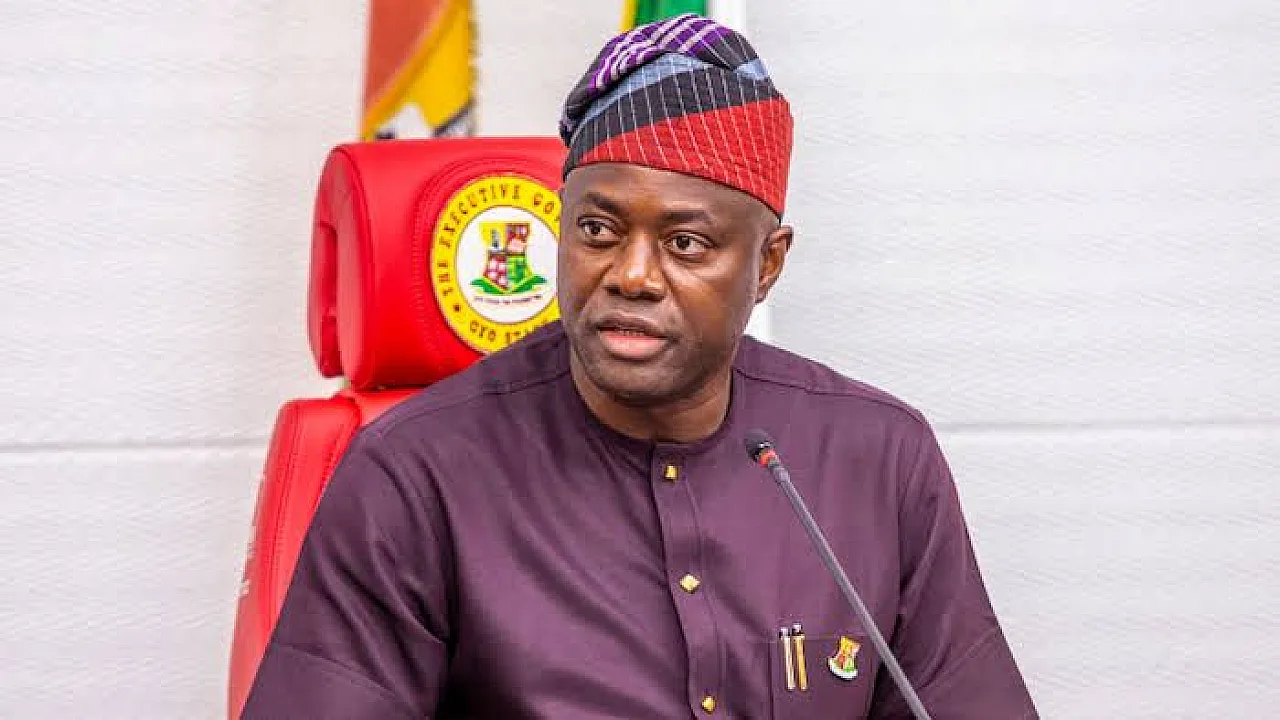
Oyo State Governor Seyi Makinde has argued that Nigeria's former ₦18,000 minimum wage could buy more goods and services than the current ₦70,000 national minimum wage, citing the pressure of rising living costs on workers.
Makinde made the remarks while addressing civil servants at the Government House in Agodi, Ibadan, after returning from annual leave.
The governor criticised current economic conditions and argued that the nominal increase in wages had not translated into equivalent purchasing power for many Nigerians.
Nigeria's national minimum wage rose from ₦18,000 to ₦30,000 in 2019, before the Federal Government increased the statutory minimum to ₦70,000 in 2024.
Oyo State itself subsequently approved ₦80,000 as the minimum wage for its workforce.
Makinde's comparison between ₦18,000 and ₦70,000 is his economic and political assessment, rather than an independently established measurement presented in the speech.
A rigorous purchasing-power comparison would need to account for inflation and changes in the prices of food, transport, housing, energy and other household expenses across the different periods.
Makinde also said Oyo State would extend its existing wage-support and transport measures for workers for another three months.
His comments come as the cost of living remains a major issue in Nigerian political and economic debate ahead of the 2027 elections.
Verita Post reported this week that Nigeria's headline inflation stood at 15.39 per cent in August 2026, according to official NBS data.


Comments (0)
Leave a Comment
No comments yet. Be the first to share your thoughts.